Tag: Cornwall

  • Discover the Traditions of Imbolc and the Cornish Furry Nights

    Discover the Traditions of Imbolc and the Cornish Furry Nights

    2–3 minutes

    What is Imbolc?

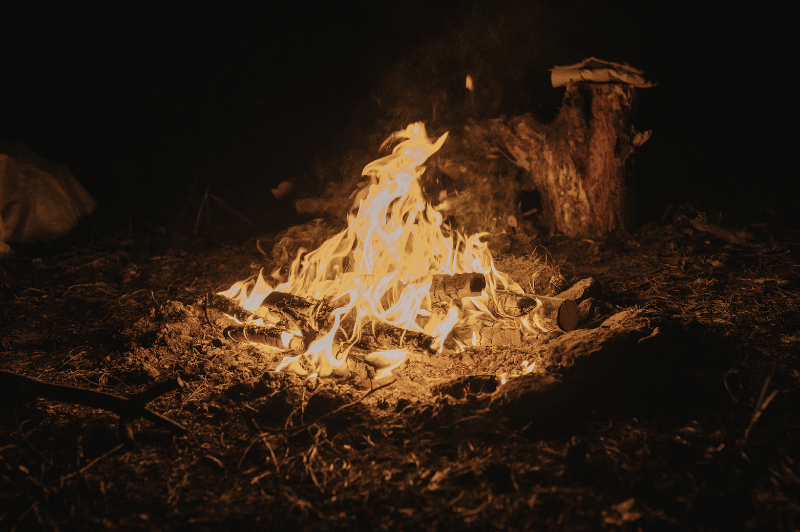
    Otherwise known as Candlemas, Brigid’s or St. Brigit’s day, Imbolc is an ancient Celtic fire festival celebrating the first whispers of Spring as winter comes to a close. Usually celebrated on February the 1st or 2nd, Imbolc marks the mid-point between Winter Solstice and the Spring equinox, when the first hardy shoots of life emerge from the soil. Imbolc means ‘in the belly’ – a probable reference to the time of year when pregnant ewes start to lactate, marking the beginning of the agricultural year.

    As far as we know celebration of Imbolc stems from an iron-age Celtic practice, associated with the Gaelic goddess Brigid and the Brythonic Goddess Brigantia. Both goddesses of fire and fertility are connected with the coming of spring and this fire festival, which is one of the cross-quarter days that make up the Celtic wheel of the year.

    Throughout the British Isles there are neolithic (late stone-age) monuments that align with the rising of the sun at Imbolc – the mid-point between the winter solstice and spring equinox. This suggests that this time of year has been marked as significant since long before the Celtic people arrived on these isles.

    Furry Nights

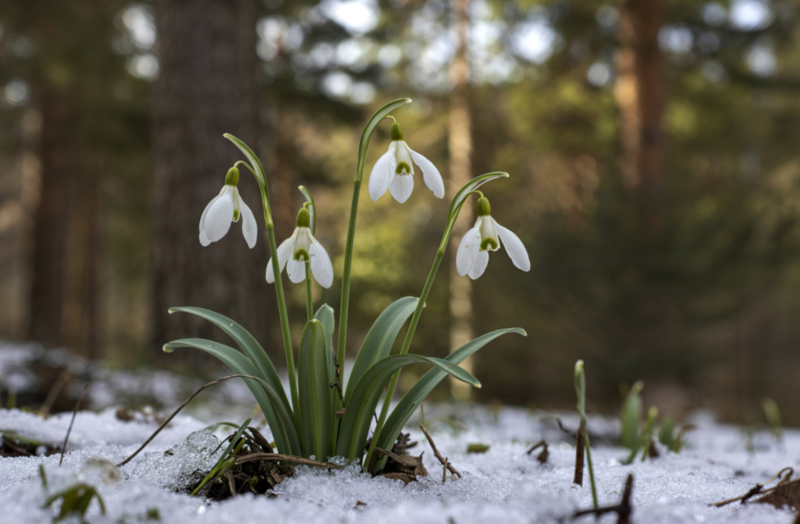
    In Cornwall the Celtic quarter nights are known as the Furry Nights, or Troyl Nights , meaning feast or celebration. Imbolc, or Candlemas as it is known in Cornwall, is also known as the ‘feast of lights’. Not strictly guided by the calendar, in Cornwall the feast of lights would be guided by nature and those first signs of life, like the arrival of snowdrops. A traditional Cornish drink of ewe’s milk, honey, cider and mashed apples would have been drunk to mark the start of the farming season.
    Cornish Cunning-Folk

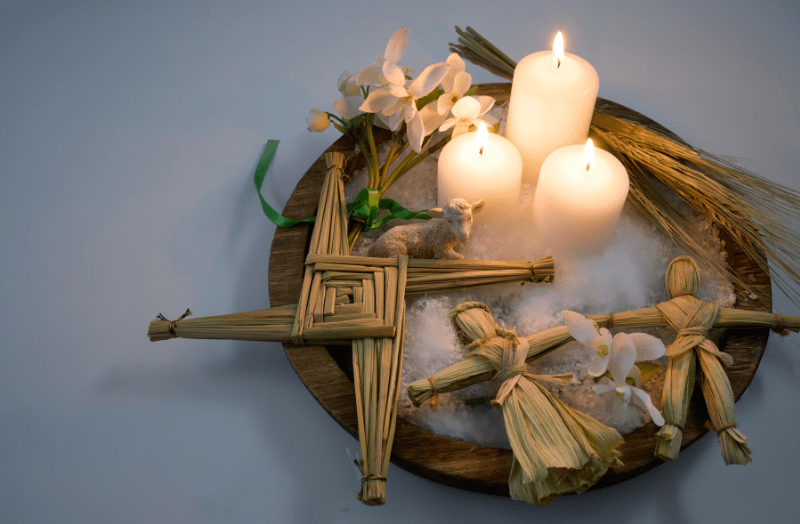
    Cornish cunning-folk would ritually mark the end of winter and the return of the sunlight as the days noticeably lengthen. Traditionally fires and candles would be lit to awaken the earth’s life force from its winter slumber. A witch’s powers would be renewed with the coming spring, a time to re-empower charms and such like. A traditional rite would involve a night time procession by candlelight to a holy well, where offerings would be made, small fires would be lit, and the life-force encouraged from the portal of the water.
    Cornwall’s Megaliths

    The neolithic people of the Cornish peninsula may have also marked this time of year through various megalithic monuments. Boscawen-Un stone-circle appears to have an Imbolc solar alignment, with the sun setting between the centre and quartz stones (if you stand on the opposite side of the circle.) on February 1st.
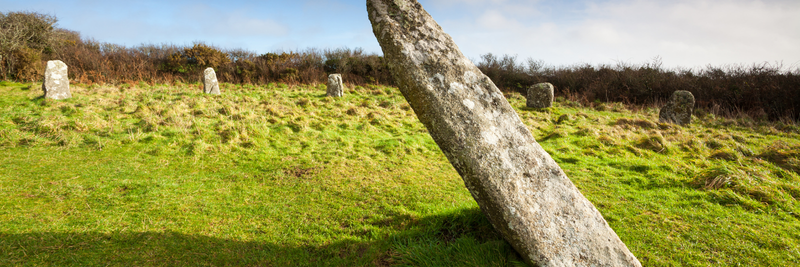
    There is another possible solar alignment with the Imbolc sun setting over the now disappeared Boleigh circle, when watched from it’s twin circle the Merry Maidens. Given how many megalithic monuments are now lost or partially destroyed, I would imagine it is likely there were other alignments with Imbolc and other significant dates in the solar and farming calendars.

    How do you mark this time of year? Here in Cornwall I like to sow my first hardy seeds undercover when I see the first snowdrops, and the bluebell shoots poking through the soil. What are your signs that spring is on its way?

    Follow me on BlueSky
  • Exploring the Mystical History of Merry Maidens

    Exploring the Mystical History of Merry Maidens

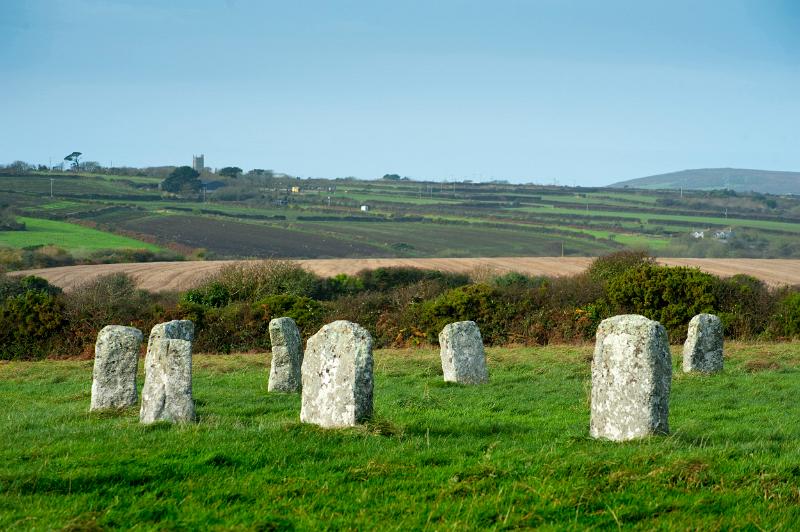
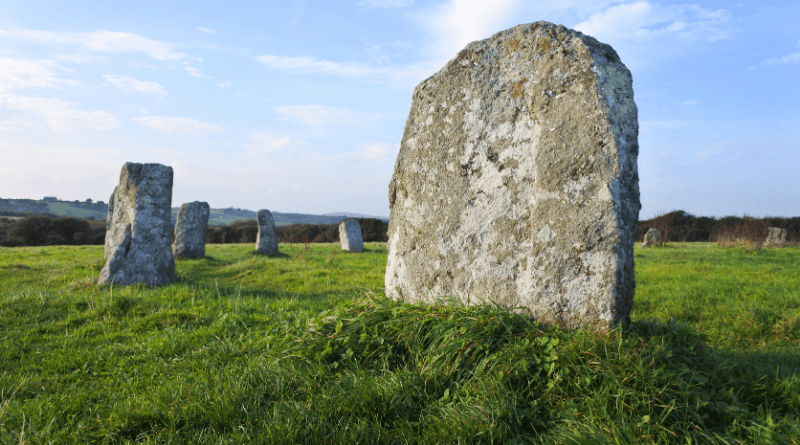
    Cover Image: Merry maidens, Penwith. From photoeverywhere.co.uk

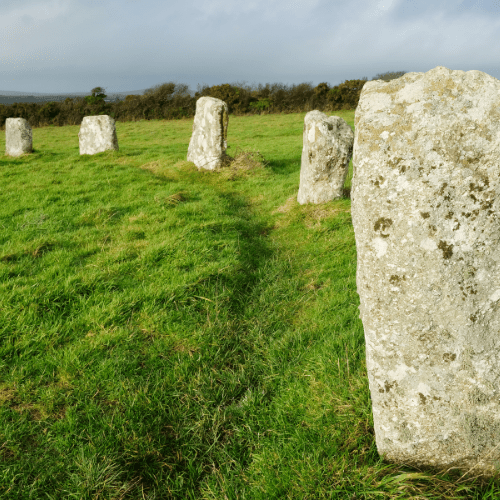
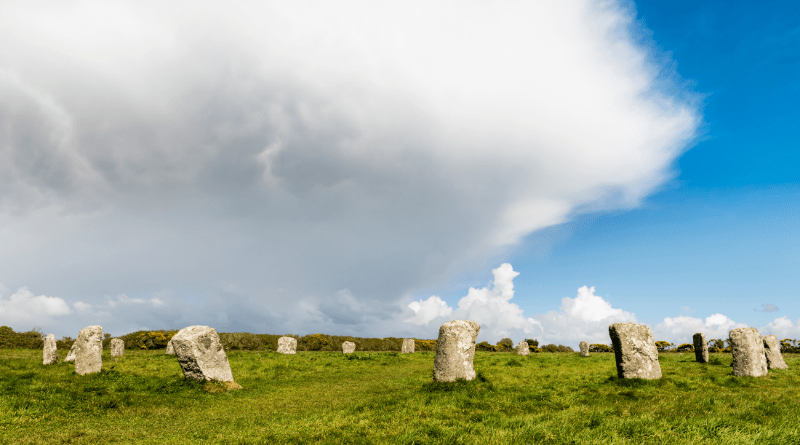
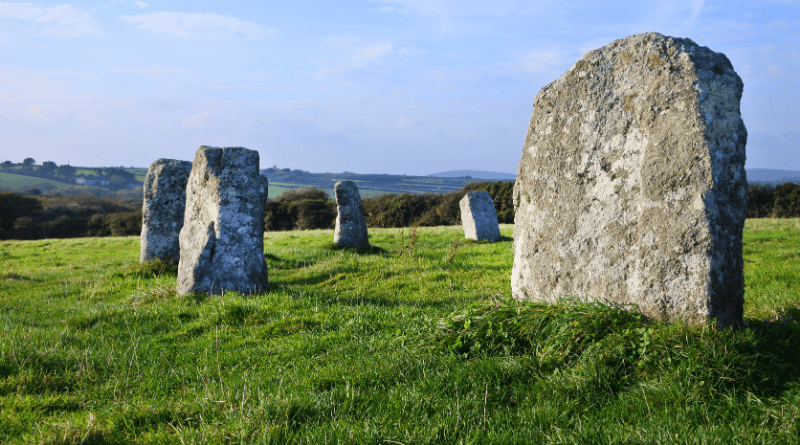
    The Merry Maidens, one of Penwith’s four remaining stone circles, are a fine example of a Cornish megalithic monument. A perfect seventy-eight-foot circle, consisting of nineteen granite stones of around four foot in height.

    Once named ‘Dans Maen’ – ‘Dance of Stones’ in Cornish, this is a probable reference to the monument’s adulterated Christian origin myth – maidens turned to stone for dancing on the Sabbath.  

    Often coined as ‘The Cathedrals of the Prehistoric,’ I find stone-circles the most atmospheric and magical of all megalithic sites. The most accepted dating for these monuments is from the early bronze age – 2500 – 1600 BC, although due to a lack of archaeological evidence they remain an enigma of prehistoric society.

    Could they be calendars of stone, wheels of time marking nature’s cycles, following celestial movements, harmonising with earth and cosmos. Or spaces for gatherings, festivals and rites of passage.

    There are thought to have been around ten other stone circles in the Penwith district of Cornwall, most now lost or destroyed.  The Merry Maidens monument itself had a twin circle, a few hundred metres to the east, also sadly destroyed by farmers.

    The high quartz content of these granite menhirs could explain some of the unusual sensations, such as electric shocks reported by visitors to the monument, for quartz is known for its piezo-electric effect.

    Sitting upon the North-facing slope of a hill, above a wooded valley, you can see the notable prehistoric sites of Chapel Carn Brea and Sancreed Beacon from the circle (Carn Galva on the north coast can be seen on a clear day,) suggesting its significance in the landscape.

    This megalith was once part of a greater complex of bronze-age sites.  Within half a mile stand the epic twin menhirs The Pipers, as well as four other bronze-age standing-stones, barrows and even a neolithic cairn. Maybe these sites are key nodes in a network of megalithic monuments which turned the wider landscape into a charged space.

    Some megalith pilgrims have reported peculiar goings on at the Merry Maidens, such anomalous lights and strange disembodied voices.

     Large magnetic variations have been recorded, unusual electromagnetic phenomena that has been known to deflect compass readings. The stones themselves are flattened on the inside and curved on the outside of the circle, which could suggest the possibility that the circle itself acted as some kind of resonator or amplifier.

    These are all curious theories that fire the imagination.

     The neolithic inhabitants of this land were the first to make their mark, the first to adorn and shape the landscape to their liking. Here in the southern half of the Penwith district this process seems to have started with Tregiffian barrow (the chambered cairn that sits just south of the Merry Maidens) and continued through the latter half of the bronze-age, with standing menhirs, holed stones and of course the stone circles.

    In the wooded valley below, in Boleigh, there is evidence of an iron-age settlement and a fine intact example of the uniquely Cornish iron-age fogou.

    Is it possible the Merry Maidens were the crowning glory of a sacred landscape revered over millennia?

    First Published in Ancient Times: Vol. 1

    Share your experiences with the Merry Maidens comment below

    Follow me on BlueSky

  • Welcome to the Uncanny Cornwall Blog!

    Welcome to the Uncanny Cornwall Blog!

    Cornwall, a land rich in myth and legend, with it’s ancient, living landscapes and mysterious monuments, its long been associated with the strange and the unknown.

    As an isolated peninsula, Cornwall, Kernow in its native tounge, has retained its ancient folklore and traditions. The Cornish people have kept strong connections with their Celtic past, with the old ways passed down through legend and custom.

    With its many ritual landscapes, and numinous megaliths, thousands of years of Cornish history can be found amongst its wild, liminal spaces.

    In Cornwall you’ll find medieval holy wells, iron-age fogous, spectacularly sited cliff-castles, bronze-age stone circles, and neolithic tor enclosures.

    Folklore rich with giants, fairies, little people, mermaids and other otherworldly inhabitants.

    Feast days and seasonal customs that align with ancient Celtic traditions.