Tag: history

  • Exploring the Nine Maidens Stone Circle, Wendron

    Exploring the Nine Maidens Stone Circle, Wendron

    2–3 minutes

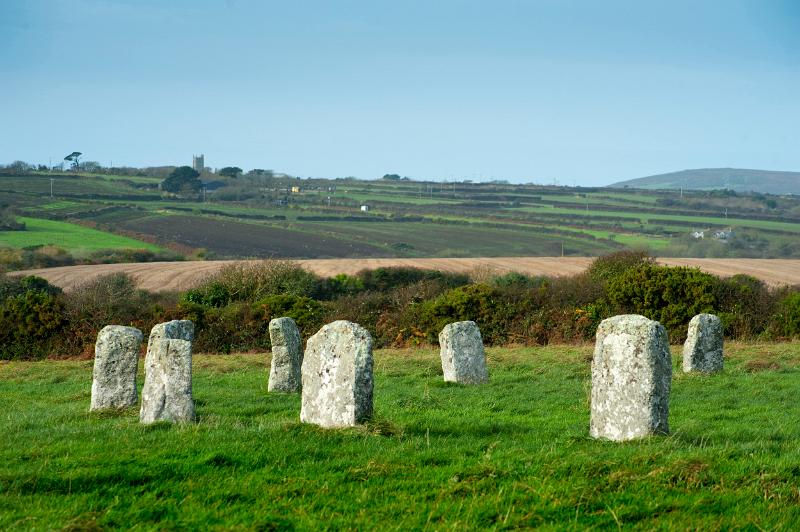
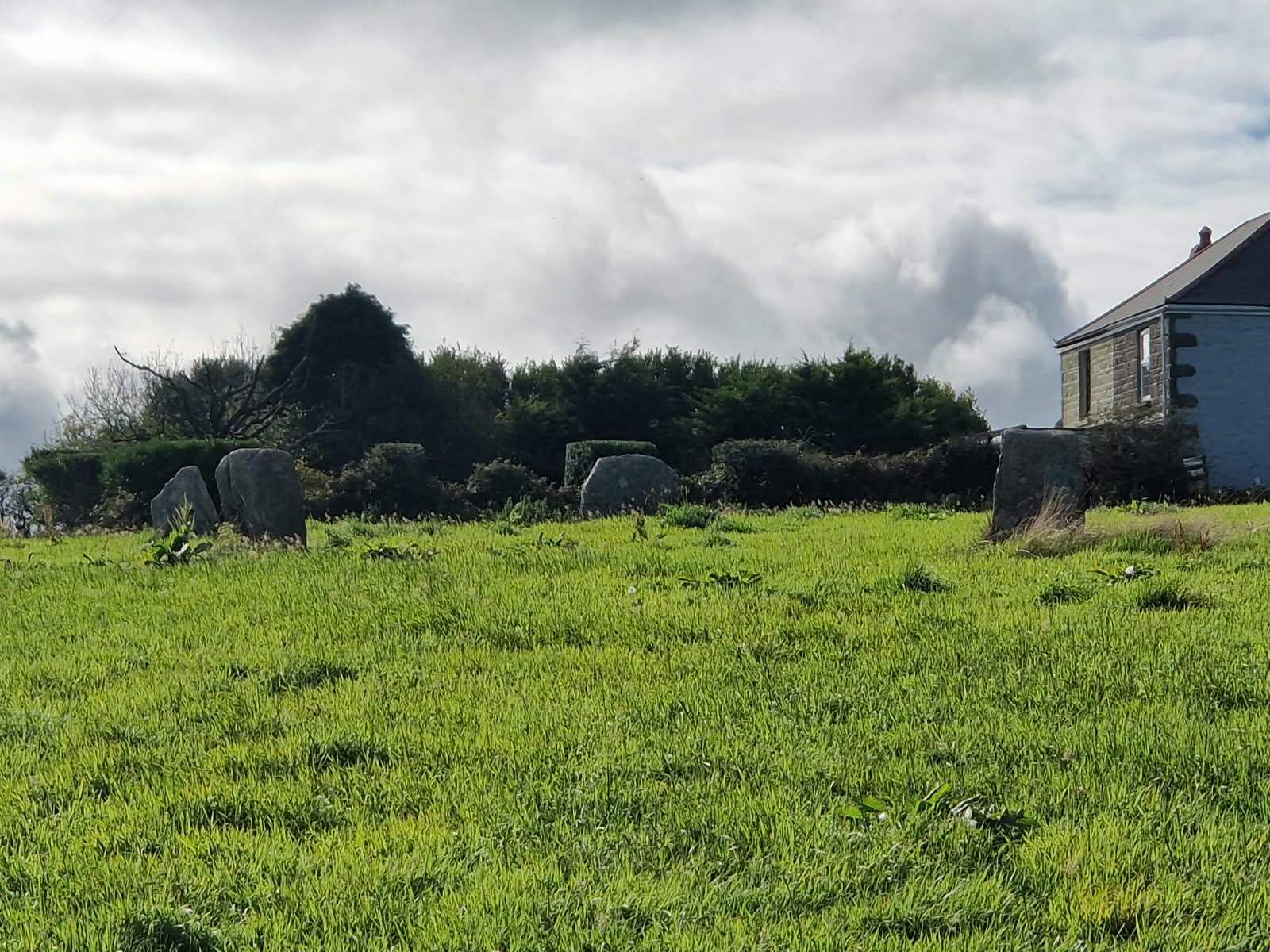
    Near Four Lanes stands what remains of two stone circles. Next to the B3280 the six remaining menhirs survive. Four still standing in situ and two others that have been built into the adjacent stone hedge.

    Thought to be early bronze age the two circles once stood 18 metres apart with now only the south-east circle partially remaining. It originally contained 14 or 15 stones and was 16 meters across. The north-west circle has two stones remaining, but they too have been built into the hedge. The stones themselves are small in comparison to some circles in Cornwall, standing between just 0.8 and 1.2 metres tall.

    One of the menhirs that have been built into the stone hedgerow

    The original Cornish name is Nine Sisters or Naw Whor. Rober Hunt (1865) suggests the monument was named in memory of nine sisters or nuns. A departure from the usual story attributed to British megaliths of maidens turned to stone for disrespecting the Sabbath – as the circle’s English name suggests.

    Sited near the crest of a hill with views of Carnmenellis, and Nine Maidens downs to Crowan Beacon half a mile to the west, north to Carn Brea and even across to the coast at Poldhu on a clear day. The stone circle has a prominent place in a landscape of prehistoric significance. Half a mile west sits Hangman’s Barrow a bronze age cairn, as well as a large standing stone and Burras Menhir roughly two miles to the south. Calvadnack settlement is a quarter a mile to the south, with the remains of round houses hidden in the heather and bracken. The site is thought to be iron age, although there have been bronze age finds close by.

    The view west toward Carnmenellis hill

    Bronze age barrows and cairns are found across this landscape, including the barrow found next to the circle and the cairns on Carnmenellis. Does this suggest a link between the stone circles and the places of the dead. Or where the circles meeting places for neighbouring tribes, bringing people together from the north and south of the area, linking coastal people with the inland tribes.   

    Double, and even triple stone circles are found in Penwith and Bodmin Moor. In 2008 West Cornwall Dowsers believe they found a third site, a possible third circle or an alternative site for the now absent second circle. This circle has a possible alignment to a cairn on the summit of Carnmenellis hill at the equinox sunrise, and possibly Crowan Beacon at midwinter sunset.

    The Merry Maidens in Penwith used to be a double stone circle

    We’ll probably never know the true meaning of the stone circles but it is clear they are sites significant to prehistoric peoples across thousands of years.  

    Map Reference SW681365

  • Pawton Quoit: A Stone Age Enigma in Cornwall

    Pawton Quoit: A Stone Age Enigma in Cornwall

    Pawton Quoit is a magnificent portal dolmen built by Cornwall’s stone age inhabitants. The imposing megalith sits, mostly intact, atop a ridge overlooking a steep valley.

    Also known as Giant’s Quoit, the monument is found along the back lanes of Wadebridge, up a private farm track. The enormous capstone, which juts out incongruously against the landscape, must weigh at least 15 tonne, and perches on just three points of the supporting upright stones. Part of it has sheared off, and sits where it fell in front of the quoit’s façade. The dolmen sits on a raised earthen mound, perhaps the vestiges of a cairn that covered some or all of the monument.

    In Cornwall we call dolmen quoits. A reference to the folk belief that Cornwall’s many megaliths were created by giants throwing stones at each other – quoit being a reference to the dolmen capstones resembling the discs thrown in a traditional game of quoits.

    Cornwall’s quoits are thought to have been built in the early to mid-neolithic period. We can only wonder at the engineering skill, and size of the labour force required, to accomplish such a feat in the stone age. The society that built the quoit would have been organised, and have enough abundance to spare those workers from the business of farming food. Moving the huge capstone up the hill, and placing it on top of the uprights, would have been an extraordinary feat. The enormous size of it would have been impractical, and much larger than required to cap the chamber – it’s a statement.

    The accomplishment of an immense engineering project like Pawton Quoit must have inferred status upon the community responsible. Portal dolmens would have been visually impressive, dominant markers in the landscape, looking over neolithic settlements and fields. Cornwall would have been mostly covered in dense temperate rain forest, except for small areas cleared for farming and settlement. Hilltops, like this one, would have been beacons rising out of the humid, wild tangle of forest, serving as places of safety and gathering.

    Part of the capstone has sheared off and sits in front of the dolmen’s facade

    In Cornwall quoits are often found overlooking valleys with a water source, or in places where neolithic settlements and fields have been found. These first farmers transformed the landscape for agriculture and permanent settlements. They were also the first megalithic builders, modifying their environment with monuments like Pawton.

    The day of my visit the weather is wild, we are lashed by a squall of wind and rain blowing in off the North coast. In the early Neolithic period, the climate would have been warmer and drier than it is today. The hilltops, ridges and tor summits would have been more hospitable to settlement before the climate changed in the early bronze-age.

    The original purpose of portal dolmen is unknown. It’s possible they were territorial, or used for burial and funerary rites. Although little human remains have been found, suggesting their primary purpose was something else. Given how architecturally impressive quoits like Pawton are, it seems they were meant to be seen. Were these marvels of prehistoric engineering built to meet the needs of the living, rather than those of the dead.

    They could be cathedrals of spiritual significance, marking places considered sacred. Possibly for capturing earth energies, or marking the seasons through solar and astral alignments. Maybe the quoits were built to bring people together in ways we can’t imagine in our modern world that’s so disconnected from nature. Maybe these monuments were built for worshipping gods that have long been forgotten.

    Or maybe, just maybe, the Cornish giants were real.

    From Popular Romances of the West of England . Robert Hunt, 1865
  • Exploring the Mystical History of Merry Maidens

    Exploring the Mystical History of Merry Maidens

    Cover Image: Merry maidens, Penwith. From photoeverywhere.co.uk

    The Merry Maidens, one of Penwith’s four remaining stone circles, are a fine example of a Cornish megalithic monument. A perfect seventy-eight-foot circle, consisting of nineteen granite stones of around four foot in height.

    Once named ‘Dans Maen’ – ‘Dance of Stones’ in Cornish, this is a probable reference to the monument’s adulterated Christian origin myth – maidens turned to stone for dancing on the Sabbath.  

    Often coined as ‘The Cathedrals of the Prehistoric,’ I find stone-circles the most atmospheric and magical of all megalithic sites. The most accepted dating for these monuments is from the early bronze age – 2500 – 1600 BC, although due to a lack of archaeological evidence they remain an enigma of prehistoric society.

    Could they be calendars of stone, wheels of time marking nature’s cycles, following celestial movements, harmonising with earth and cosmos. Or spaces for gatherings, festivals and rites of passage.

    There are thought to have been around ten other stone circles in the Penwith district of Cornwall, most now lost or destroyed.  The Merry Maidens monument itself had a twin circle, a few hundred metres to the east, also sadly destroyed by farmers.

    The high quartz content of these granite menhirs could explain some of the unusual sensations, such as electric shocks reported by visitors to the monument, for quartz is known for its piezo-electric effect.

    Sitting upon the North-facing slope of a hill, above a wooded valley, you can see the notable prehistoric sites of Chapel Carn Brea and Sancreed Beacon from the circle (Carn Galva on the north coast can be seen on a clear day,) suggesting its significance in the landscape.

    This megalith was once part of a greater complex of bronze-age sites.  Within half a mile stand the epic twin menhirs The Pipers, as well as four other bronze-age standing-stones, barrows and even a neolithic cairn. Maybe these sites are key nodes in a network of megalithic monuments which turned the wider landscape into a charged space.

    Some megalith pilgrims have reported peculiar goings on at the Merry Maidens, such anomalous lights and strange disembodied voices.

     Large magnetic variations have been recorded, unusual electromagnetic phenomena that has been known to deflect compass readings. The stones themselves are flattened on the inside and curved on the outside of the circle, which could suggest the possibility that the circle itself acted as some kind of resonator or amplifier.

    These are all curious theories that fire the imagination.

     The neolithic inhabitants of this land were the first to make their mark, the first to adorn and shape the landscape to their liking. Here in the southern half of the Penwith district this process seems to have started with Tregiffian barrow (the chambered cairn that sits just south of the Merry Maidens) and continued through the latter half of the bronze-age, with standing menhirs, holed stones and of course the stone circles.

    In the wooded valley below, in Boleigh, there is evidence of an iron-age settlement and a fine intact example of the uniquely Cornish iron-age fogou.

    Is it possible the Merry Maidens were the crowning glory of a sacred landscape revered over millennia?

    First Published in Ancient Times: Vol. 1

    Share your experiences with the Merry Maidens comment below

    Follow me on BlueSky