Tag: Penwith

  • The legend of the Devil and the Hooting Carn

    The legend of the Devil and the Hooting Carn

    2–3 minutes

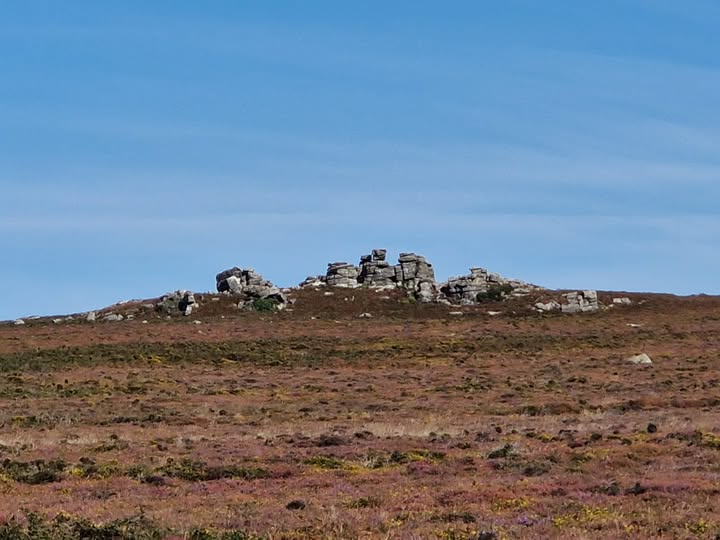
    Crowning the Gump upon Penwith Moor sits Carn Kenidjack with its striking stack of granite boulders. The hill overlooks bronze age barrows and a stone circle, telling the human history of this place which goes back thousands of years. The rugged carn has collected tales told over unknown generations. Known as the hooting Carn on account of the unearthly sound the wind makes as it whistles through the granite stacks of stones, This hill has birthed local folklore warning travellers of the dangers of traversing this section of heathland, known as the Gump, after dark. The devil himself is said to ride the moors, cloaked and hooded, hunting lost souls.

    Tregeasal Stone Circle at the foot of Carn Kenidjack

     A folktale from the mining villages of St. Just and Pendeen, recorded by Robert Hunt in 1865, tells of two miners returning home exhausted from their days work underground to be fatefully tempted by a dubious shortcut. Although aware of the lore of the devil upon the moor, they chanced their luck as it was only just sunset and they were weary on their feet. With darkness threatening in the east, dusk shrouded the carn in gloom. As they approached the granite crag, they saw lights flickering amongst the rocks. Looking up they saw figures moving around the stacks cloaked in shadows. A rough song was heard culminating in a shrill hoot.

    The giant was thrown from the rocky crag

    Terrified, they span only to find a hooded horseman had galloped up behind them. They were unable to see his face under his hood, and although they did not know him, they found themselves following him back to the Carn as if under some spell. As they reached the summit of the hill, they saw uncouth and wild creatures coming out from between the rocks. Two terrible savage looking giants were set to wrestle in a circle in front of the stones. There was a call for light, which the horseman provided by throwing back his hood to reveal his terrible face, his eyes burning with a furious fire that lit the circle in an unholy light. To their horror the miners realised this was the devil himself. Still in a daze they watched the two giants wrestle, which only ended when one threw the other off the rocks to his certain death.

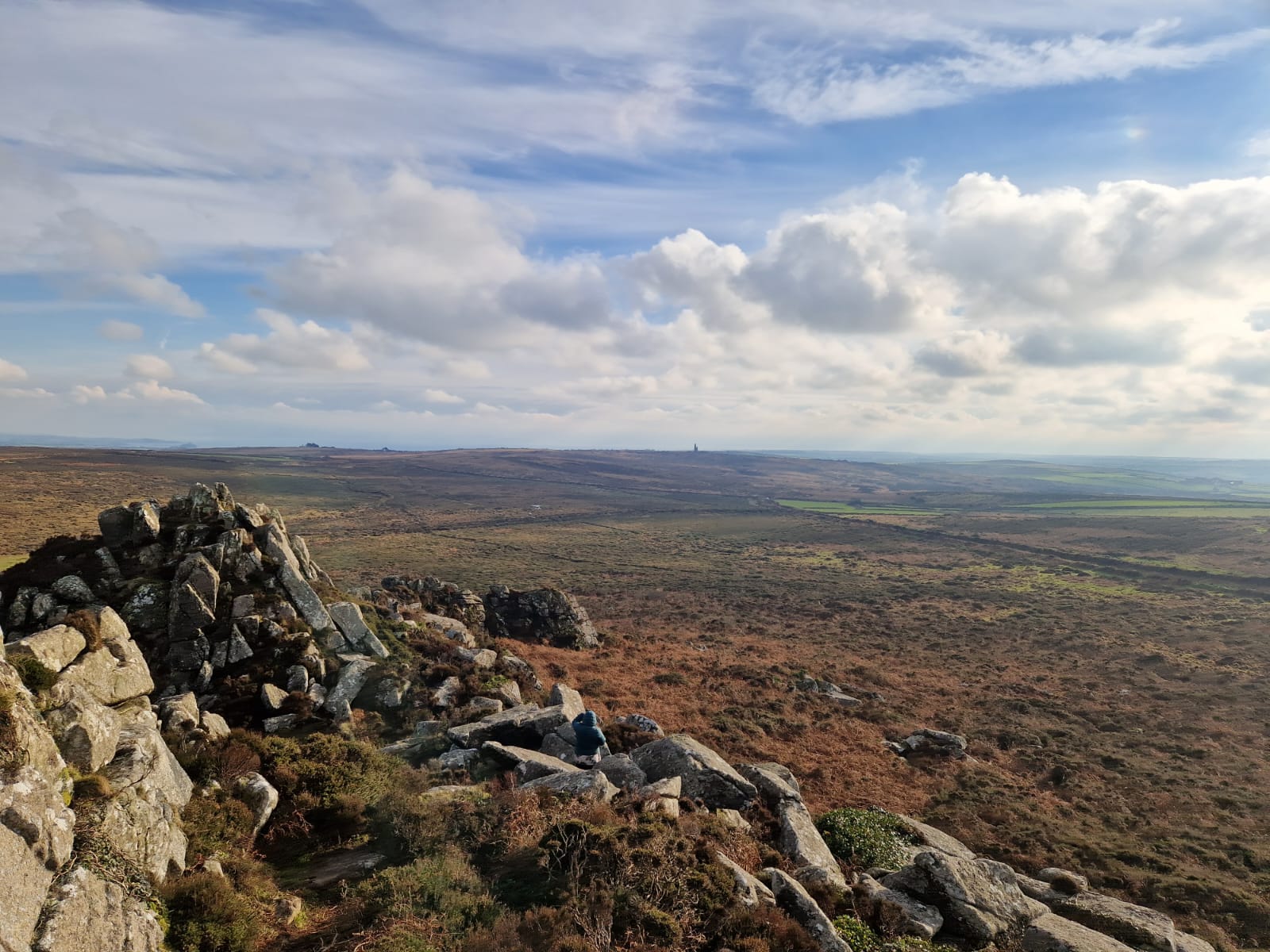
    Looking across Penwith Moor and Tregeasal Stone Circle from atop the Carn

    The devil’s wild and wicked host surrounded the winner, and with an unholy baying celebrated the victory. The miners rushed to tend to the stricken loser to find his life slipping away. As god-fearing men, they said a prayer for his soul, and at that moment a sudden darkness swamped the hill and silence fell. Then a ferocious gale rushed across the moor and wiped the hellish host away leaving the hillside bathed silver moonlight.  An angry black cloud rolled out to sea with the blazing red eyes of the Devil within. Still dazed, the miners could not find their way and had to wait until sunrise for the spell to lift to continue their journey home.

  • Cornish Holy Wells: The Story of Dolly Dunking

    Cornish Holy Wells: The Story of Dolly Dunking

    2–3 minutes

    A peculiar custom, once forgotten, Dolly dunking is a Cornish tradition where young girls would take their dolls to blessed in holy wells on Good Friday. A custom which has documented since the 1800’s.

    In Cornish Feasts and Folklore (1890) M.A. Courtney recorded, “On the afternoons of Good Friday, little girls of Carharrack, in the parish of Gwennap, take their dolls to a stream at the foot of Carn Marth and christen them.” However, local anecdotes say this took place at Figgy Dowdy’s Well, also known as Margery Daw’s Well, located near the top of Carn Marth hill.

    The same custom was observed at Fenton Bebibell sacred spring in west Penwith. (Cornish Homes and Customs, 1934) Named fenten byghan bobel in Cornish, which translates as “Well of the Little People,” this is a possible reference to the small people of Cornish folklore.

    Cornish holy wells, and sacred springs, are thought to be places where spirits dwell, to whom offerings would be made for healing, blessings or foretelling. The custom of ‘dolly dunking’ could hark back to folk memories of ancestral spirits who dwelt in, or nearby, springs and the offerings people made to them.

    Alternatively, the ‘little people’ could be a reference to the blessing and naming of babies, a practice that may have once taken place at holy wells. It’s possible these traditional rituals were being remembered and acted out by young girls with their dolls.

    Good Friday doll blessing is a tradition that has been revived by CASPN at Fenton Bebibell in Morvah, which sits near the Men an Tol monument. The Cornish Ancient Sites Protection Network resurrected the custom 18 years ago and now do an annual ‘dolly dunk’ on Good Friday. The well was lost to the bracken and gorse of the heathland for decades until it was accidentally rediscovered in the 2000’s.

    Is it possible that the tradition of dolly dunking, whatever its origins, was once widespread across Cornwall’s holy wells and springs. Taking place in isolated, insular communites, that weren’t in the habit of writing things down, the local customs were lost to time. Leaving us with only scant records of this peculiar Cornish tradition.

    We can thank CASPN for keeping this part of old Cornwall alive for future generations.

    Figgy Dowdy’s Well Map Ref: SW7146740637  Latitude: 50.221485N  Longitude: 5.205112W Fenton Bebibell Map Ref: SW429352 Latitude: 50.160957N  Longitude: 5.601117W

  • Piskey Led – A Short Tale

    Piskey Led – A Short Tale

    Looking down across North Penwith Moors

    3–5 minutes

    Ghosts of the old world make their presence still known upon the moors. Known by their ancient stone walls and standing stones that still litter the landscape. The walkers, incongruous in their primary colours, garish symbols of the twenty first century.

    The group, as per the instructions set for them by the B&B owner that morning, wore their coats inside out.

    He told them, “Tis a defence against being Pyski-led. Cause I hope to see you all return.”

    Of course, the tourists had no idea what this meant, but in a humorous nod to the peculiar local traditions, they complied.   

    Ding Dong Mine, Madron, Penwith

    Two couples and a fifth wheel set out upon Penwith moor that afternoon. The unattached member of the party grudgingly took up the rear.

    Occasionally he would stop to photograph fungi that protruded from the verges, or to finger the yellow gorse flowers that encroached upon the path.

    “Andy, will you keep up. You don’t want to be left behind.”

    The cloying humidity pressed close so Andy removed his post box red coat to tie around his waist.

                This was a mistake.

    Afternoon passed and dusk crept upon the group; purple hues and dark shadows warned of the encroaching night.

    Dusk creeps upon Penwith Moors

    “Keep up man,” shouted the couples.

    Andy, enraptured by the local flora, continued to stop and observe nature’s treasures.

    As he bent to catalogue a wax cap mushroom; a glossy tactile yellow specimen, he failed to notice the peculiar mist that had descended. Surprised to find himself enveloped in this damp shroud he forged on.

    He realised he had lost the path and had found his feet upon sodden turf devoid of footprints.

    He shouted for his fellow walkers but the fog absorbed his voice.

    “Okay, don’t panic I’ll use the sun, it’s setting to my west so this must be the path east to the car park,” he reasoned.

    He walked on. In circles. For hours.

    His breath came fast and shallow.  His heart beat crept up; drumming a panicked rhythm against his ribs.

    Unbeknown to him he had slipped over the threshold between worlds into the land of the hidden folk. If only he had known the etiquette of this strange land.

    He came upon a gathering within a granite circle of lichen decorated standing stones.

    Taken within Boskednan Stone circle with Carn Galva to the North, Penwith Moors

    Inside was a raucous scene of music, dancing and feasting. People only two foot high at their tallest, dressed in clothes woven from green sedge fronds. Those dancing in the centre of the revellers wore red woollen capes that flared about their shoulders as they spun like whirling dervishes.

    The etiquette in this world is clear. You must never let the fairy folk; the pyskies – spirits of the unbaptised dead, catch you observing them. You must continue upon your way as if oblivious to their presence.

    Cornish piskies or ‘little people’ as they are sometimes known

    Andy, our coatless walker, who shrugged off his protection, did not know this lore. In his amazement he stared at this peculiar scene and called out to the private little folk who revelled within the ancient circle of stones.

    “Hello…Oh god please can you help me? I don’t know where I am – I’m completely lost.”

    A sudden silence fell over the merriment. All eyes fixed upon him, unblinking. 

    Two sharp claps came from within the crowd and the fair vanished.

    At once multiple hands descended upon him; relentlessly pinching, slapping, poking and pulling at his clothes. He tumbled – endlessly – through gorse bushes and brambles. Thorns tore at his skin.

    The torment seemed eternal, but at some point, he must have fallen unconscious. He awoke, from what seemed like the deepest sleep of his life, on a blanket of moss, upon a bed of granite. Roused by an inquisitive wet nose nudging at his face, he opened his eyes to the soulful gaze of a brown Labrador, wagging his tail with a search and rescue insignia on his red harness. His human companion followed behind on his radio,

    “Got him.” He turned to Andy, “Am I glad to see you mate, been looking all round here for three days now.”

    First Published by Literally Stories

    Cornish Piskie art by creaturesbygreg on Deviant Art

    Have you ever had an experience with one of Cornwall’s infamous ‘little people?

    Share this post on social media

    Follow me on Bluesky