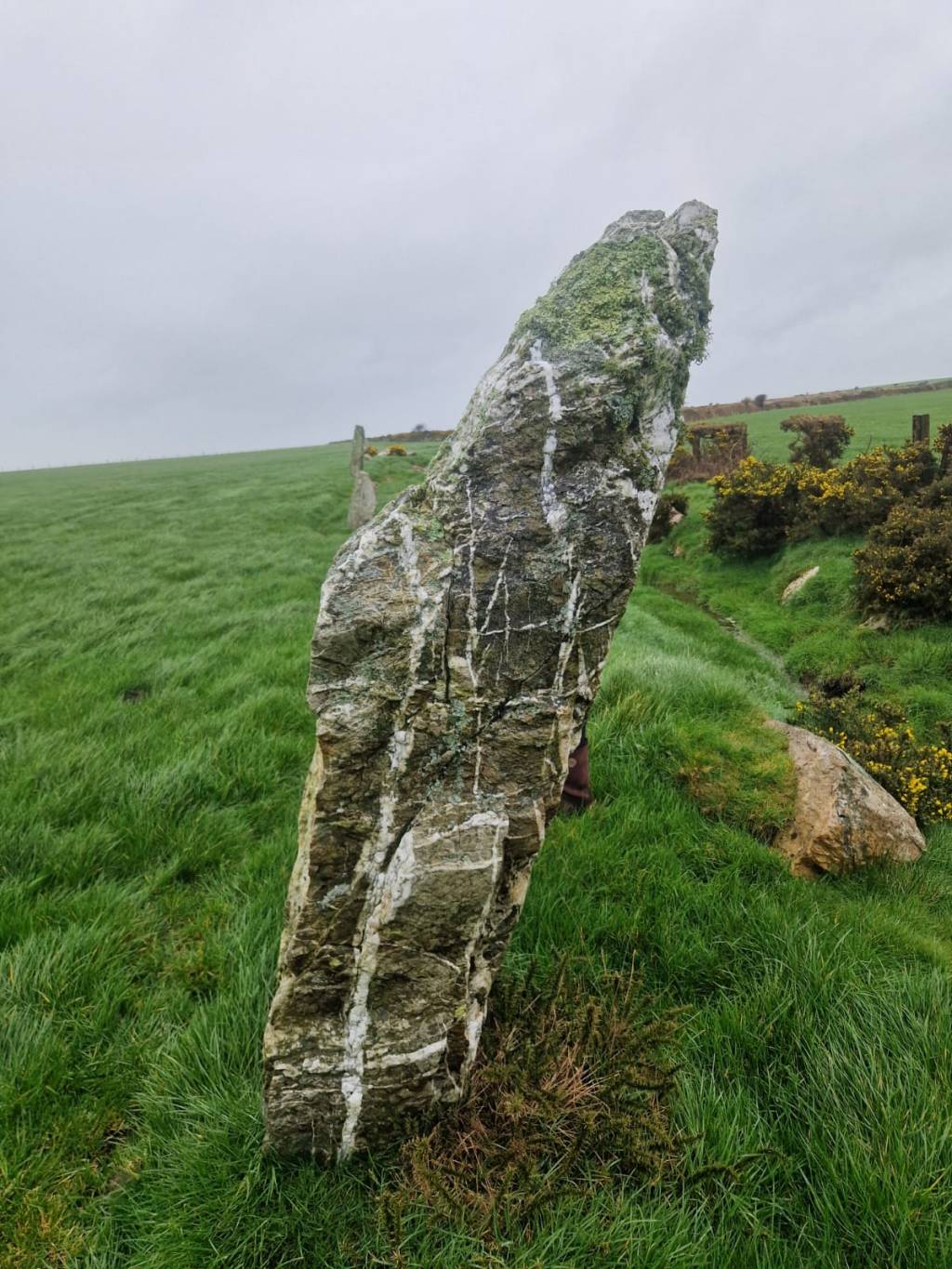
The Nine Maidens stone row stands in a field immediately south of the A39. The early bronze-age monument sits in a field on Breock Downs between St Columb Major and Wadebridge. Nine irregular arrow shaped menhirs stand in a row running SW to NE, parallel to a small stream whose banks are littered with what appear to be large field clearance stones.
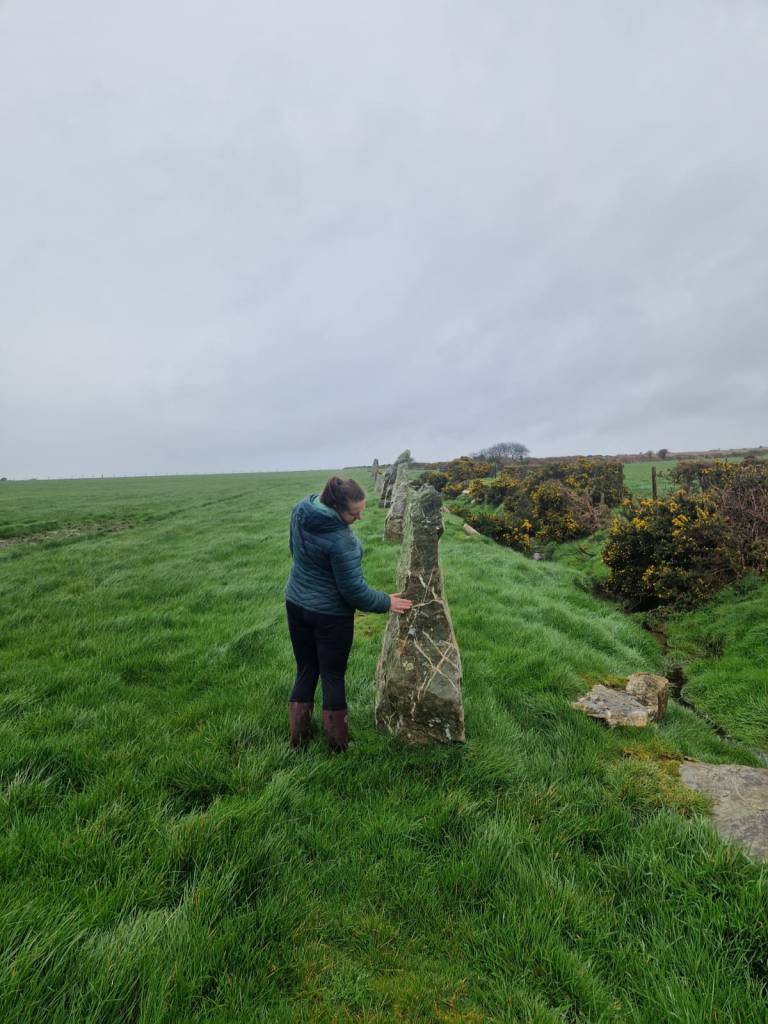
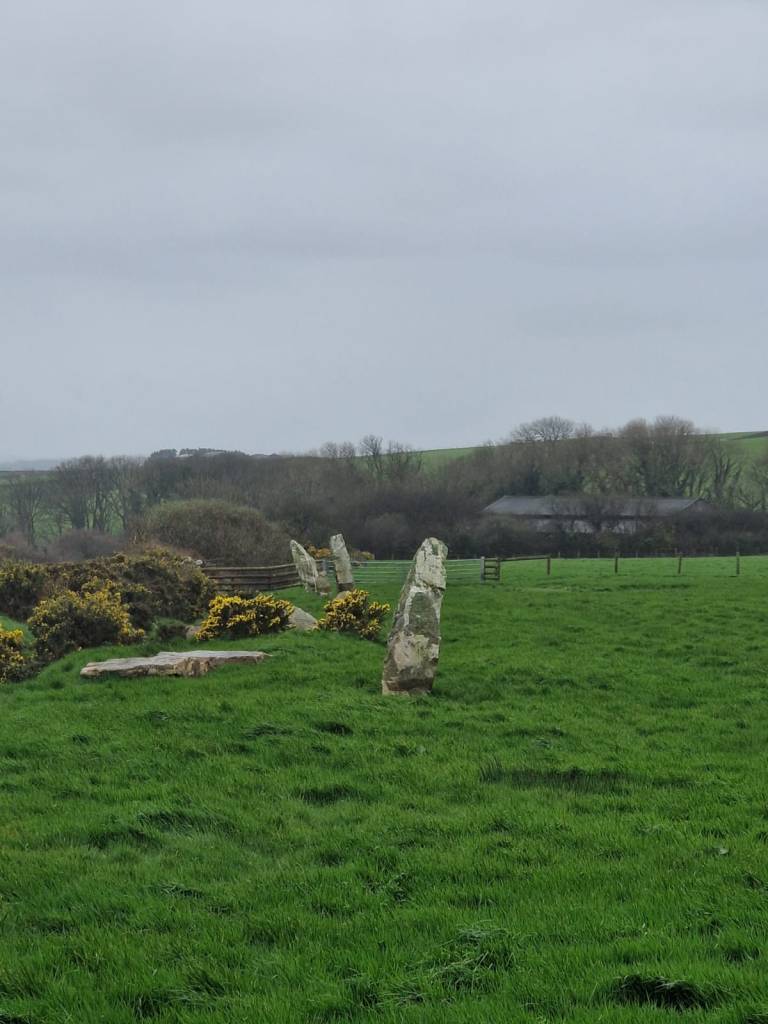
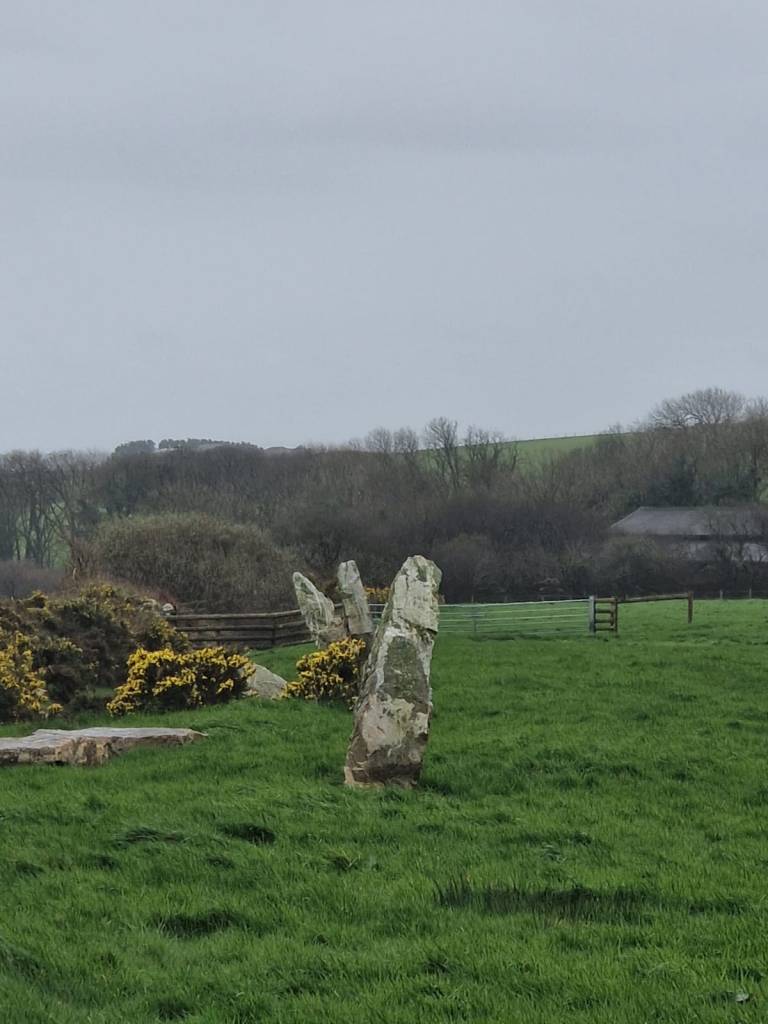
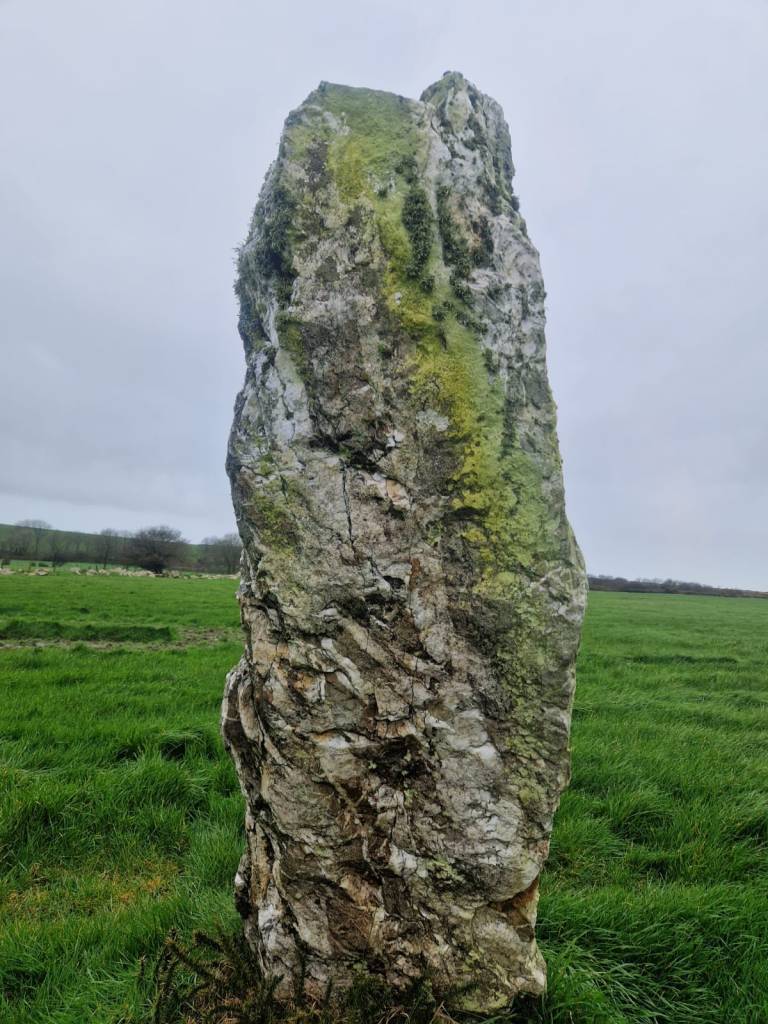
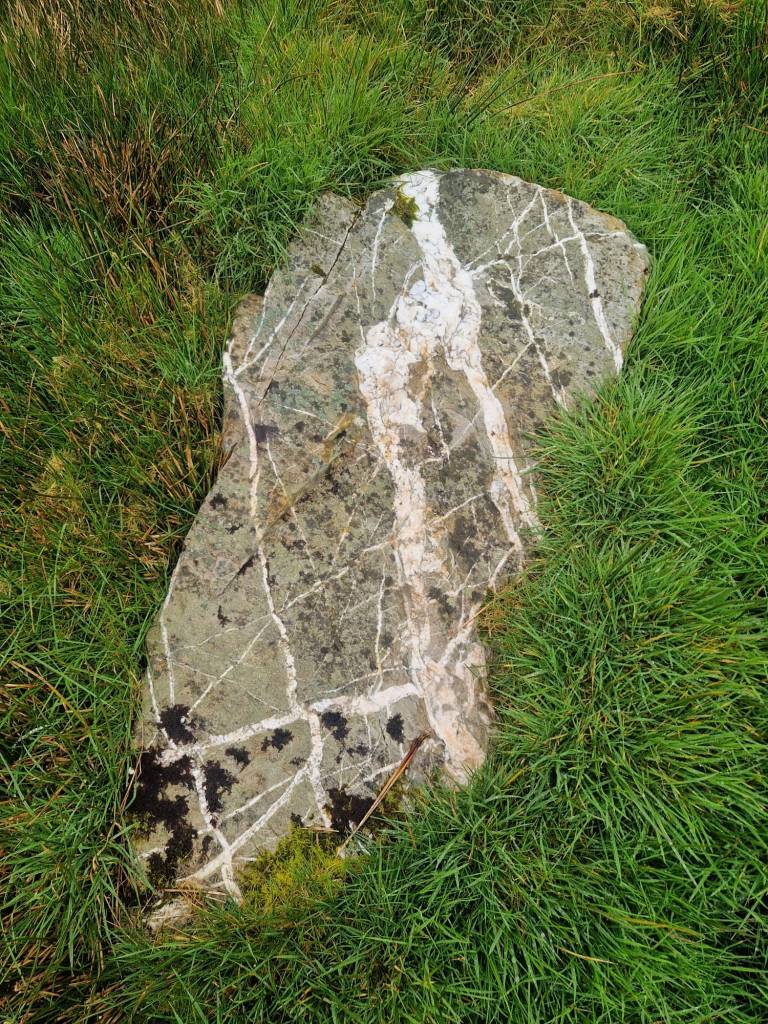
Standing from 0.8 metres to 1.9 metres tall, with one recumbent stone 3 metres in length, the menhirs are local grey slate rich with thick quartz veins weaving elaborate paths across them. They are living breathing stones hosting their own eco system of mosses and rare lichens.
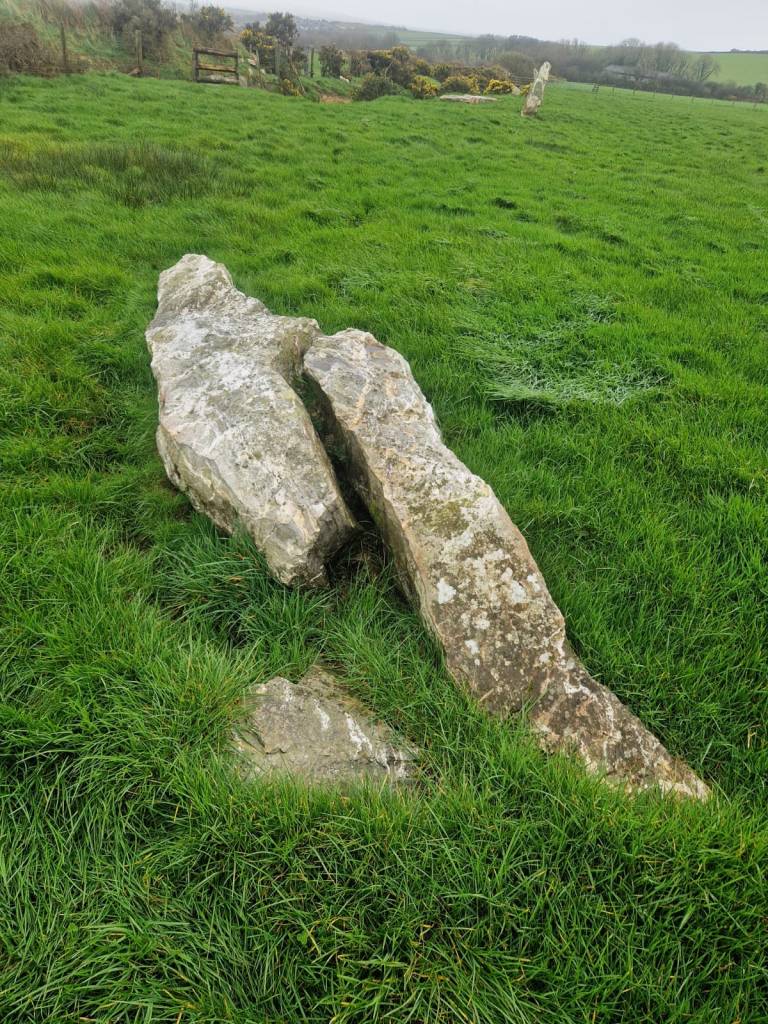
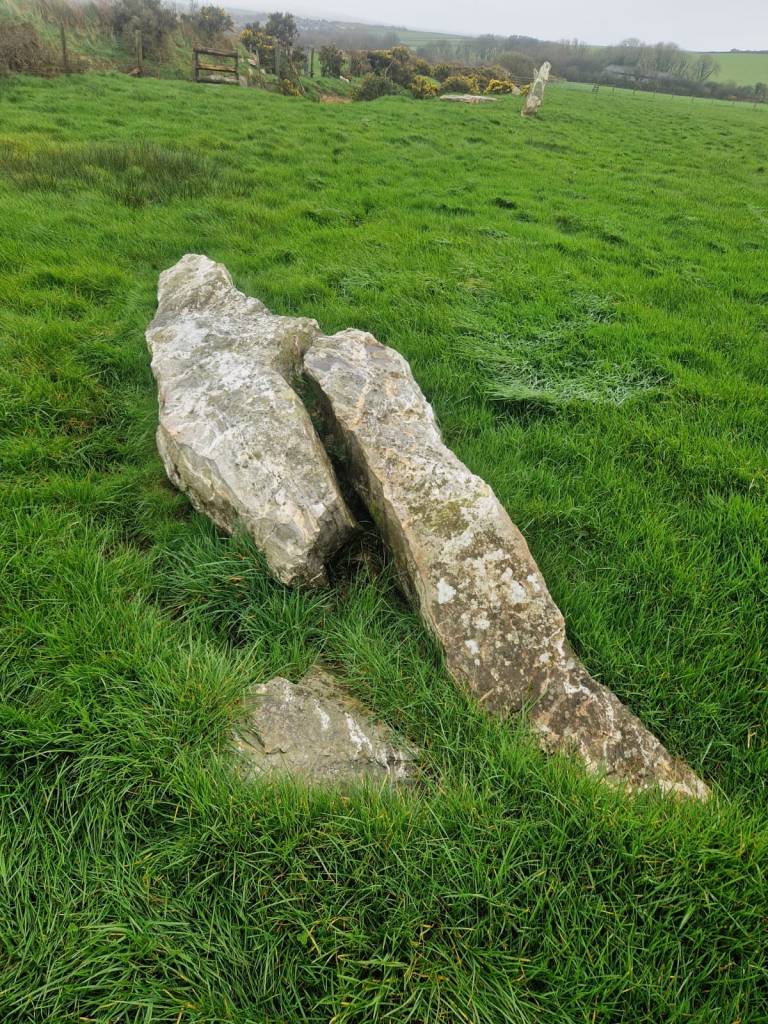
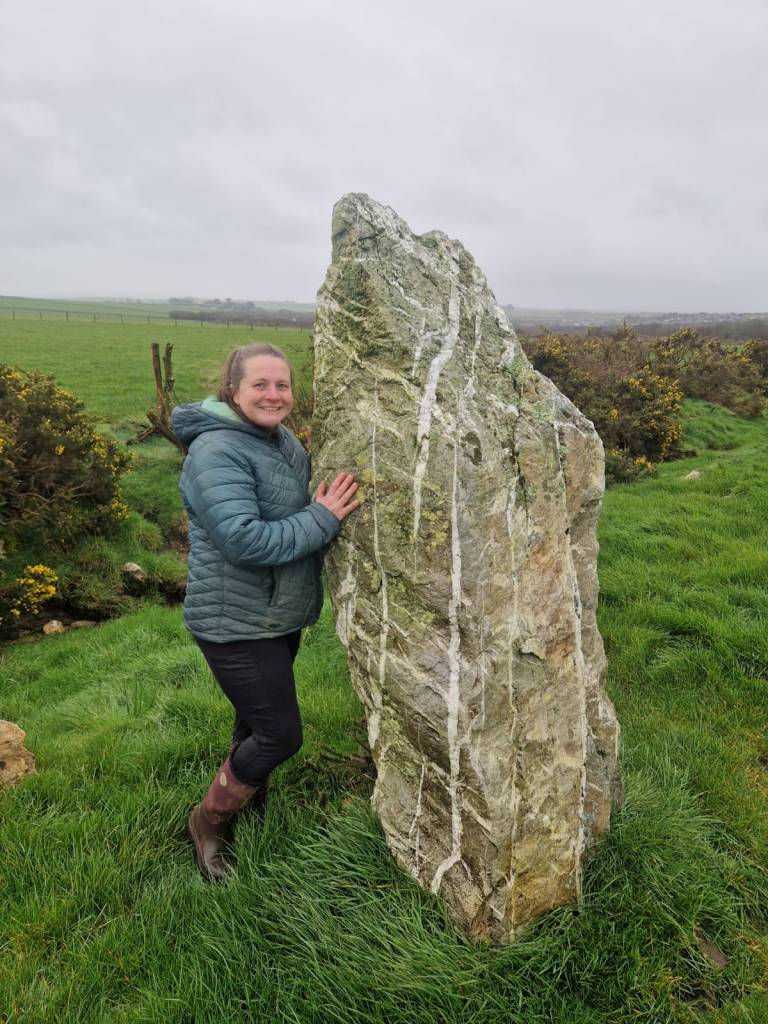
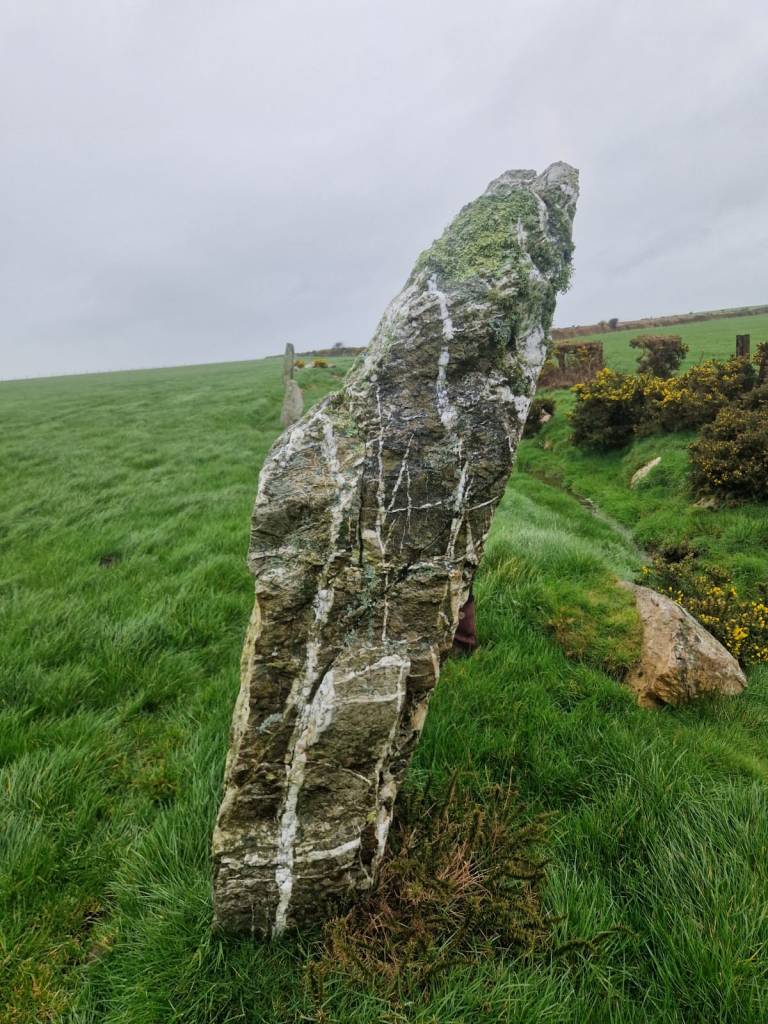
To access the stone row, you pass a sleeping hawthorn tree looming over a pool of water. The lone hawthorn is known in Celtic mythology as a fairy tree, a gateway between worlds, a marker of ancient boundaries and sacred ground. It would seem to those early bronze-age people that this ground was indeed sacred. To the North-East of the row there is a solitary menhir, now fallen and broken up, known as The Fiddler, or Magi Stone, which stood on the same alignment as the maidens. The monolith and the stone row are possible ceremonial parts of a bronze-age complex of sites, leading to the burial barrows on the highest point of the ridge.
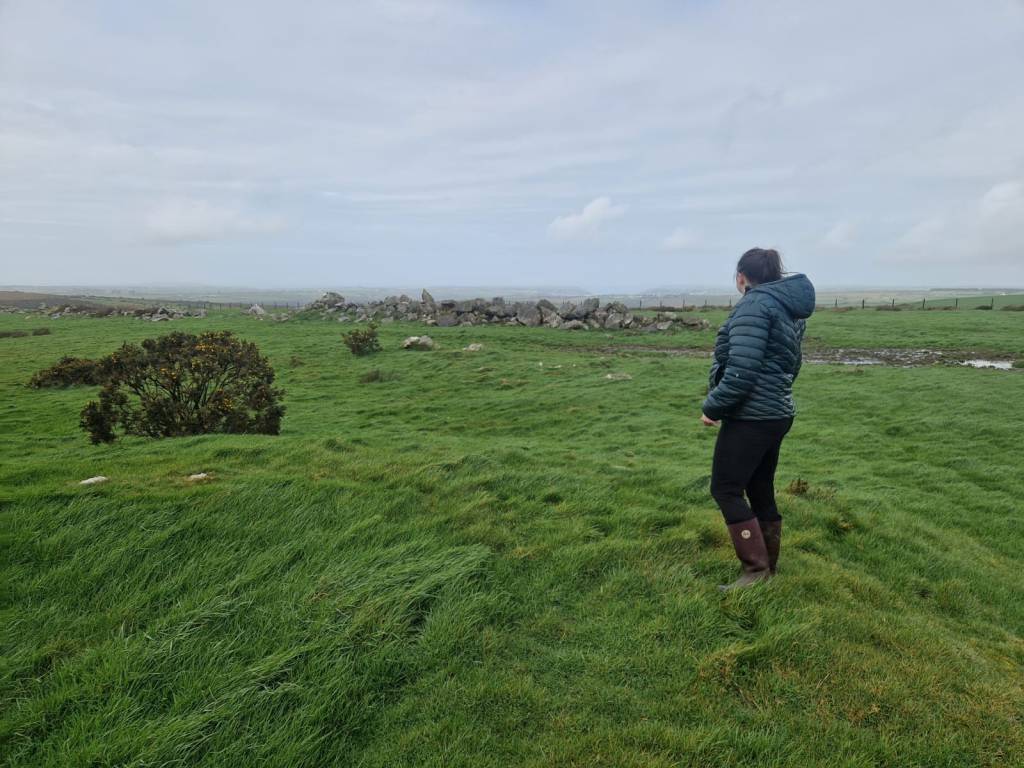
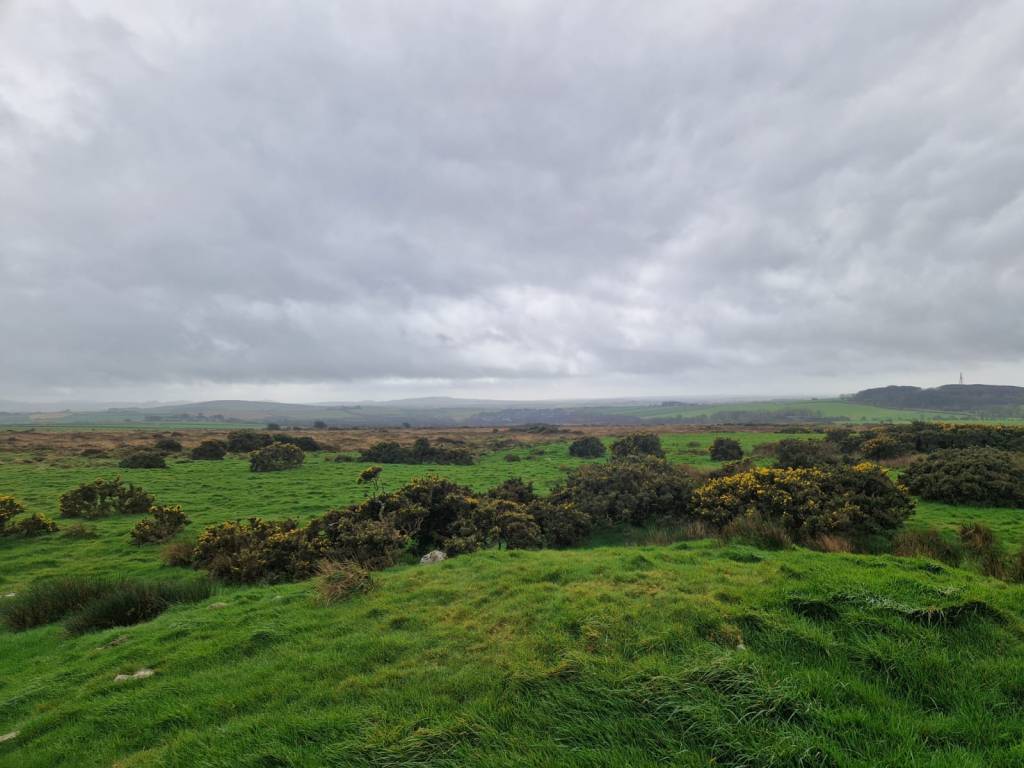
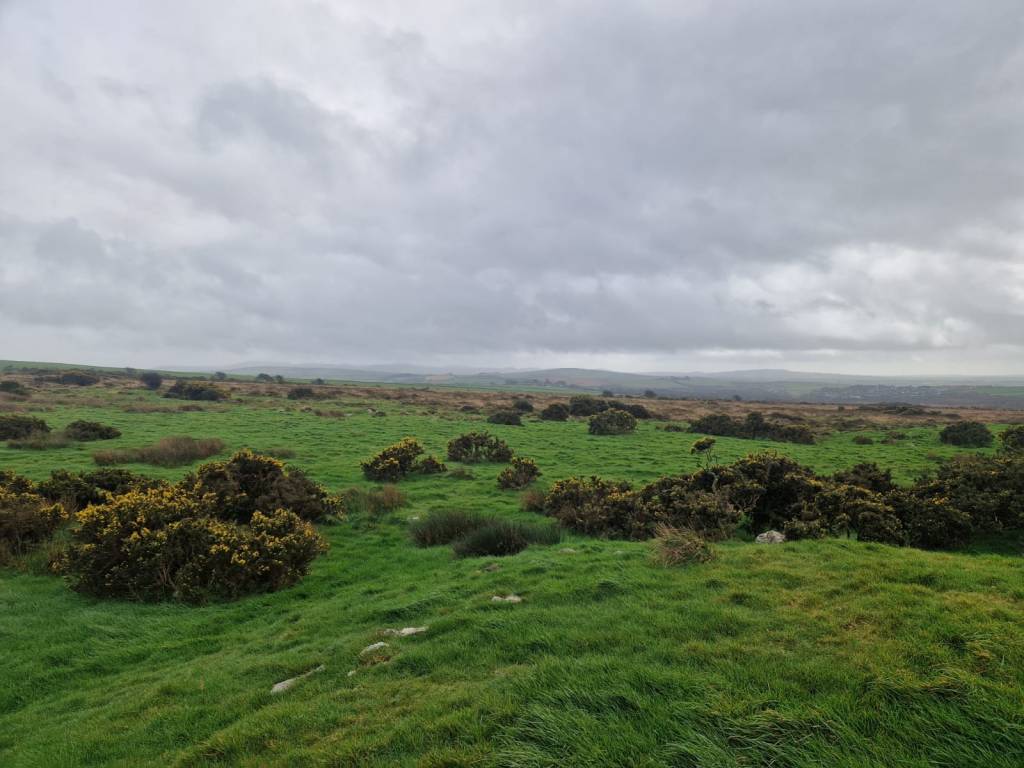
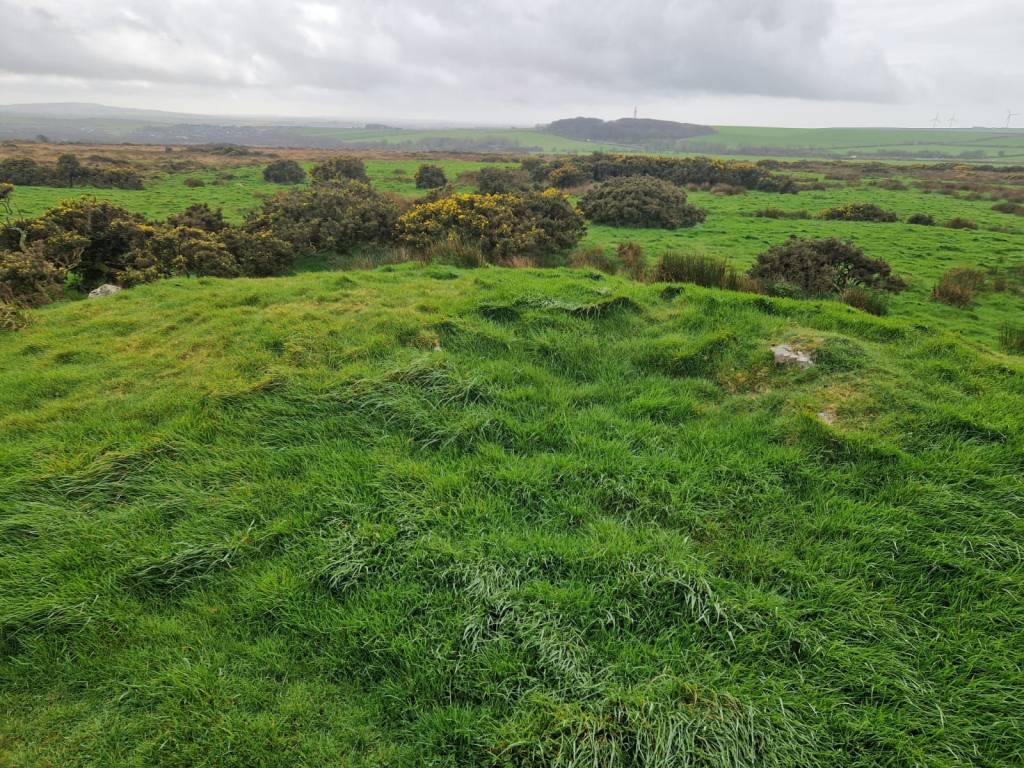
Standing on top of the largest barrow, to the south I can see the iron-age hill-castles of Castle an Dinas and Demelza Castle, to the east the highest points on Bodmin Moor, Rough Tor and Bronn Wennili (Brown Willy) are visible. Looking to the north I can see Padstow Bay, and north-west along the coast to Trevose Head, the site of an iron-age cliff-castle and a headland that has given up numerous bronze-age finds. Territorially this hillside would have been an important location.
The fields and hedgerows surrounding the monument are littered with large stones, similar to those used in the stone row. Most of these are a result of field clearances, but some look suspiciously similar in shape and size to the stone row menhirs, with thick quartz veins. I can’t help but wonder if there were more stones to this row, or if it’s possible there were other stone monuments in the complex.
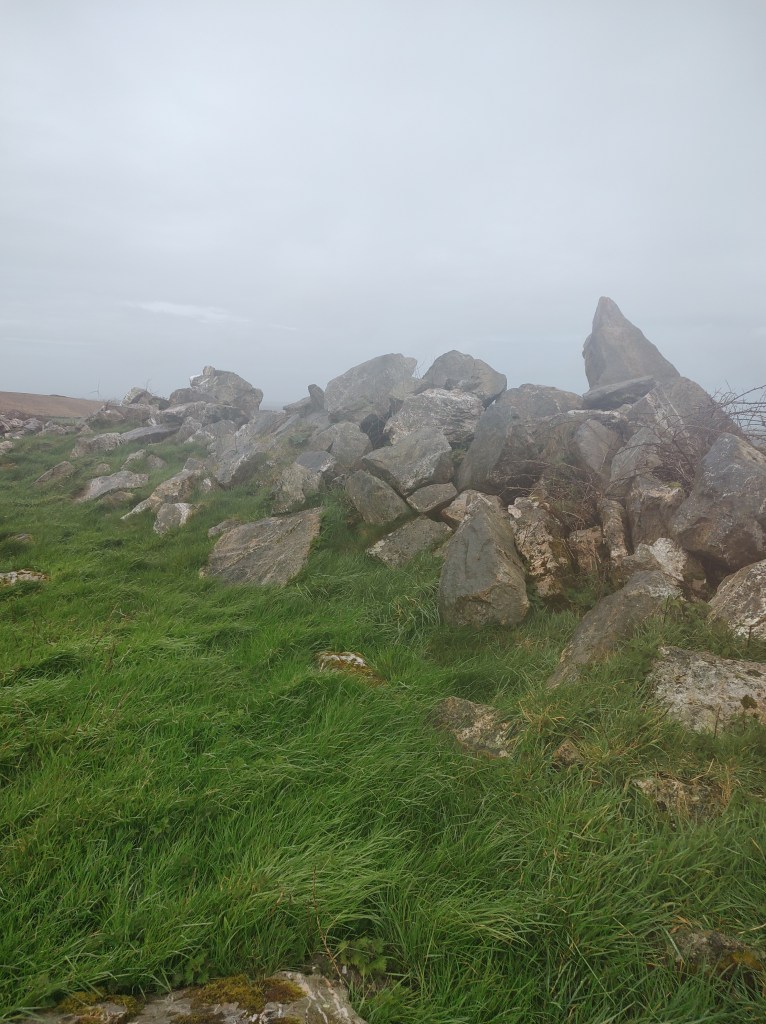
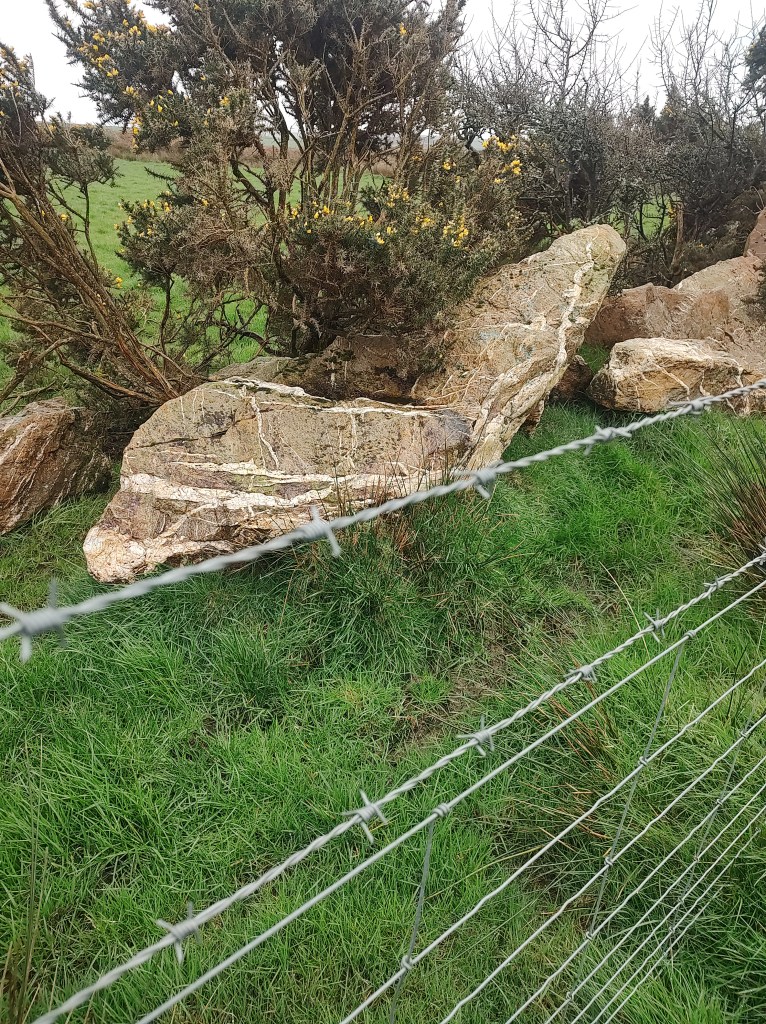
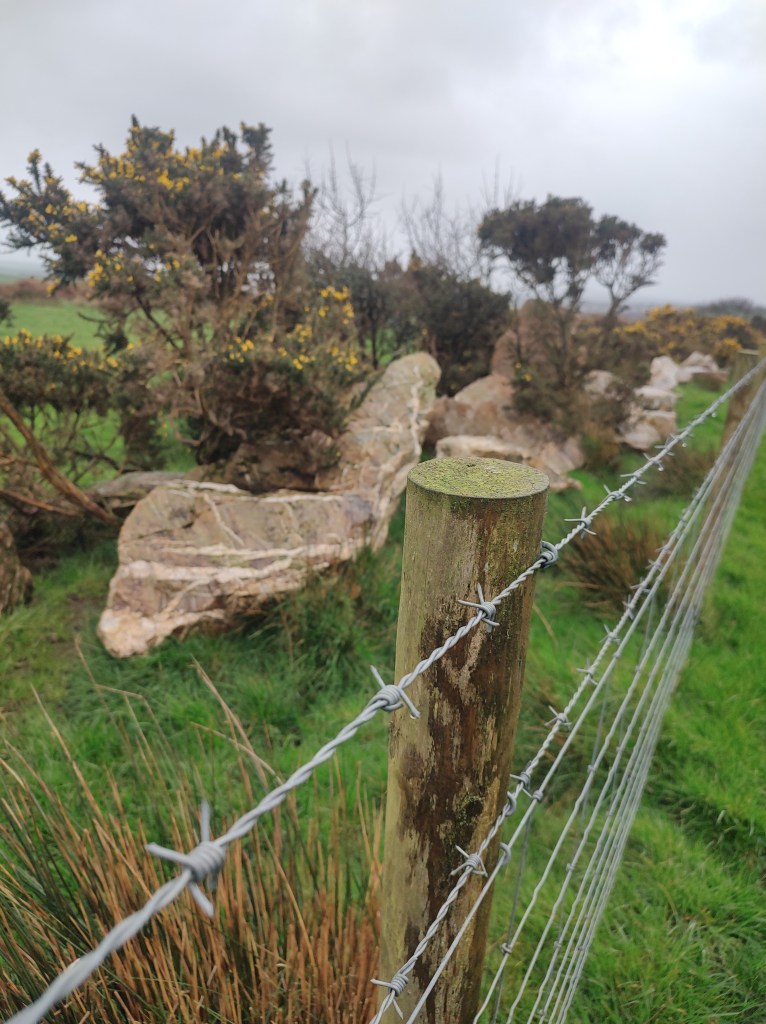
Richard Carew in his Survey of Cornwall (1602), names the site The Sisters, and John Norden, in 1728, mentioned another adjoining site he called the Nine Sisters, which may have been a double stone row or circle. In 1995 a team of dowsers believe they found 4 more stones to the row and a second stone row 25ft to the west of it. (Cheryl Straffon, 2004.)
Breock Downs itself is home to other significant prehistoric monuments, including the neolithic dolmen Pawton Quoit, and Men Gurta the largest monolith in Cornwall. It seems reasonable to assume that this was a culturally significant area of ancient Cornwall, a landscape rich with meaning. Were the Nine Maidens a processional monument leading to the peak of the hill where the prominent burial barrows sit. Was this spot a node in a network of hills, ridges and beacons across the spine of mid-Cornwall.
The Nine Maidens will no doubt continue to keep their secrets close, and give us only questions, but it’s the mystery of these Cornish megaliths that has captured imaginations for millennia after millennia.
Map Ref: SW93636754 Latitude: 50.471271N Longitude: 4.909599W
 Uncanny Cornwall Blog