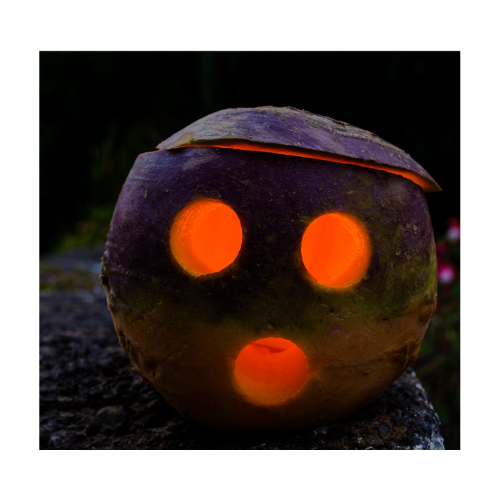
Halloween, or Nos Kalan Gwav in Cornish, ‘eve of the first day of winter’ (first day of winter = kalan gwav.) is a traditional feast day, also known as a ‘furry night,’ in Cornwall. Nos Kalan Gwav is a celebration of the changing seasons, marking the start of winter, for giving thanks for the harvest, whilst marking the transition to the darker months of the year when the plants die off and the world slumbers.
The original Jack O Lanterns were not carved out of pumpkins, but turnips and other root vegetables, in Celtic nations such as Cornwall, Ireland and Scotland. Carved to ward off any unwanted spirits walking the earth whilst the veil between worlds was thinnest, and the supernatural more possible, on All Hallows Eve, which was also known as Allantide in Cornwall. ( Similarly named to the Welsh and Manx celebration of Hollantide, both English names for the Celtic festival.)

This was a time for feasting and forging the social bonds necessary to prepare for the coming of winter.
The gifting of apples was often a feature celebrations, given as gifts for good luck. It was said if a young woman put an apple under her pillow she would dream of her future husband. In the west of Cornwall they were known to nail two pieces of wood into an X and attach candles to each arm with apples hung between them.

Allantide was also a feast day associated with games of divination. There were many charms for young women to discover if they would be married or not, and what kind of person that future husband be. One game involved pouring molten-metal through the handle of a key in a bowl of water to see what shapes the metal would make, to foretell what trade a future husband would have. Or she could write names onto slips of paper, ball them up and put them in a deep basin of water. The first name to unfurl and rise to the top would be the name of the future spouse.
For Cornwall’s pagan communities Nos Kalan Gwav is a time to contemplate death and remember the ancestors. The shifting of the seasons, the gates of winter opening, welcoming us into the dark, creates an opening between the worlds of the living and the dead. October 31st is also a traditional quarter-day in Celtic traditions, being equidistant between the autumn and winter equinoxes.

Practices which hark back to ancient Celtic traditions reveal that today’s Halloween celebrations have their roots in rituals that date far back in time. Feast days were a crucial part of our farming ancestor’s social calendar, marking the changing of the seasons was crucial to their survival. Observing the occasion today, whether you carve pumpkins or turnips, is a thread of connection to a time when we were all more in tune with the natural world.

Leave a Reply