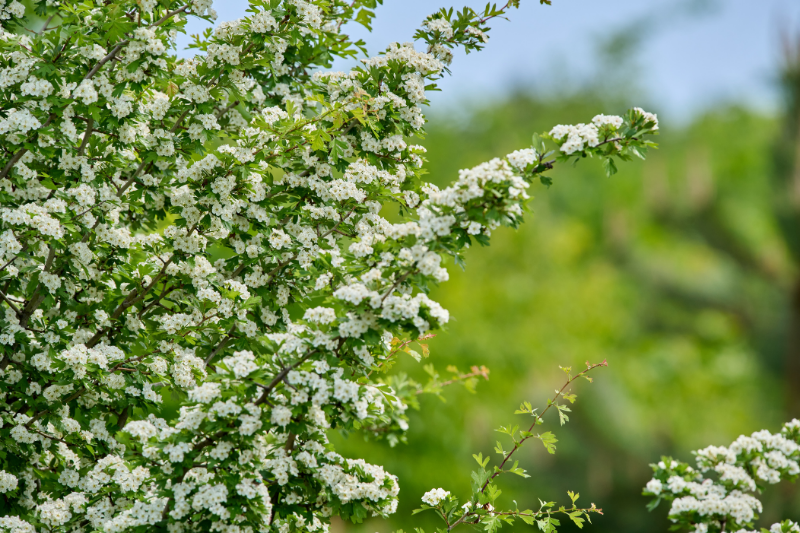
The May-Thorn blossom blooms heralding the changing of the seasons with it’s snowy clouds of petals. The unmistakable perfume of the hawthorn’s delicate white flowers brings the promise of summer on the fresh spring breeze.

This thorny shrub is often found in hedgerows or as small trees standing as lone sentinels in fields and rugged heathland where only the hardiest of flora survive. In Cornwall the impish hawthorn tree is often seen gnarled and twisted, perpetually wind-blown in the fierce Atlantic gales. Looming over the rural lanes from atop the Cornish hedgerows, or stood fast against the elements amongst gorse and heather.

As a seasonal signpost, the hawthorn announces spring with its blossom and greets autumn with its rusty red haws. Blossoming around May Day as the land quickens with life, the Hawthorn is celebrated in the folk customs of the British Isles for marking the birth of summer and the death of winter. For modern pagans the blooming of the hawthorn marks the arrival of Beltane, the Gaelic May Day festival.

May Day Celebrations in Cornwall Today
May-Day is still celebrated today in Cornwall. Obby oss in Padstow, Bolster in St. Agnes, Flora day in Helston, and in Penzance the revived custom of May-Horns. In the past the May-Day was a popular Cornish feast day, or ‘furry day’. Hawthorn blossom was a part of many May-Day folk customs, using the flowers as decoration. 
Hawthorn has many names; May Tree, May Blossom, Quick Thorn and Whitethorn. In his book Fern Seed & Fairy Rings, Rupert White tells us how in Cornwall the hawthorn was often called May, Fryth or Aglet Tree. With the young edible shoots often called ‘bread and cheese.’
A tree traditionally sacred in the British Isles, the hawthorn is entrenched in folklore and rich with magical associations. In Celtic mythology the tree is associated with faeries, known to some as faerie-thorn, it marks a liminal space, a gateway to other worlds. It is also known to mark boundaries of sacred lands.

The hawthorn also has dark connotations. Often found standing alone, farmers avoided cutting them down for fear of angering the faeries. Throughout the British Isles it was also considered a dreadful omen of misfortune to bring any cuttings inside the house.
Rupert White tells us, in Cornish folklore it was said that to sit under a hawthorn in May is dangerous, in case you give the faeries power over you. There was also a superstition that young children sitting under the tree may be taken away by the fae.
Hawthorn has medicinal value and is renowned for improving heart health. The leaves, flowers and red berries (or haws), lower blood pressure and are high in vitamin C.


Leave a Reply